Tuesday, September 29, 2020

Race the Rain

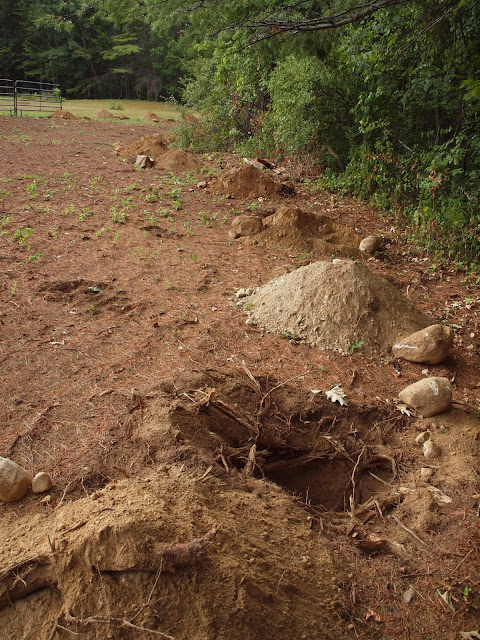
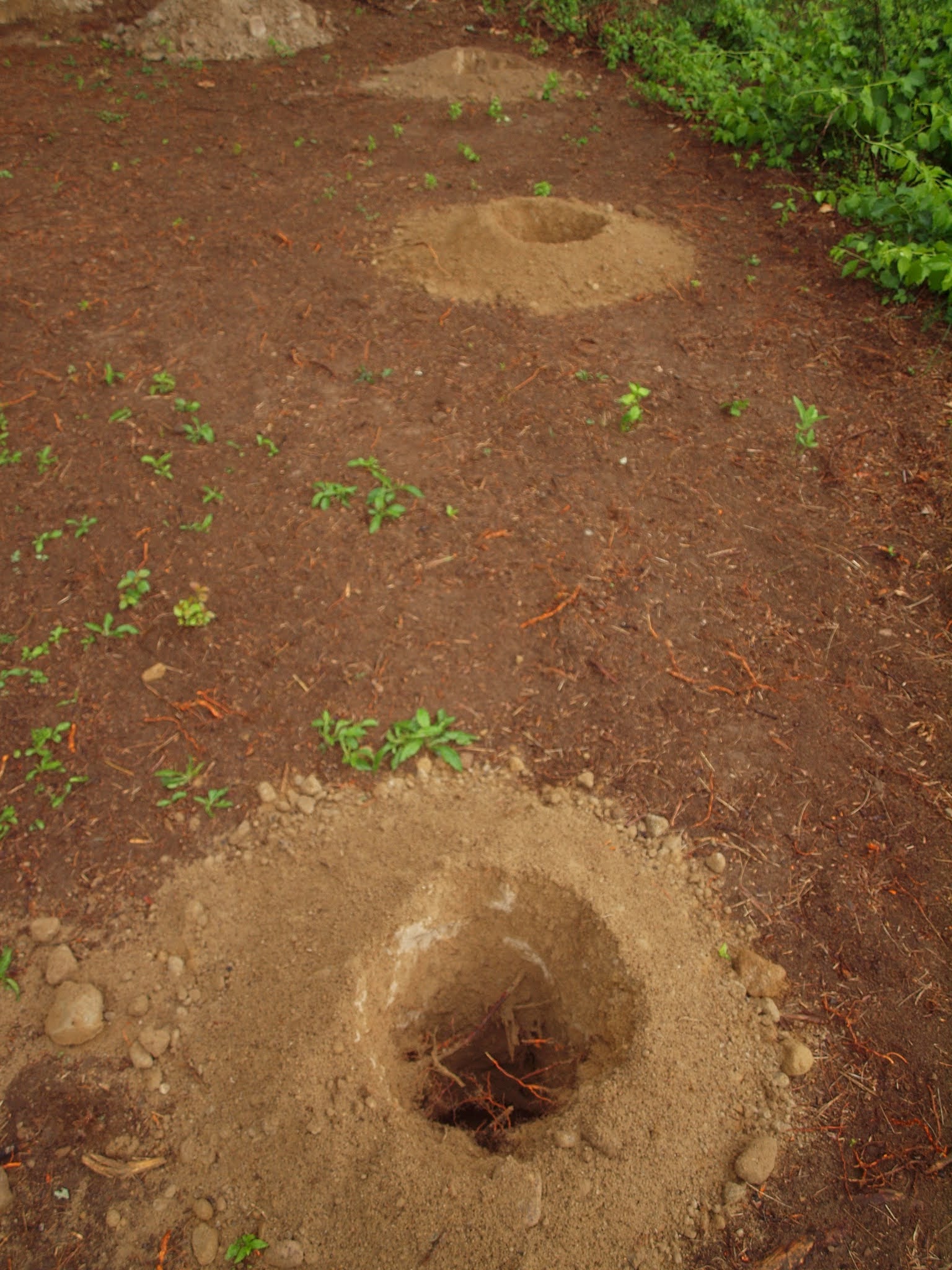
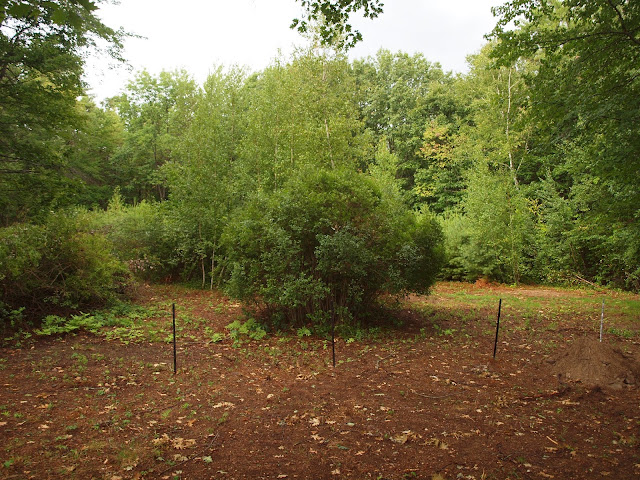
 After I installed the first handful of posts for the track, we had a good rain.  It packed the dirt around the posts nicely and really helped to set them.  Knowing this, and seeing the long range forecast calling for sporadic rainfall and one good day of rain early this week, I was determined to install all of the posts - about 40 of them - while the dirt piles were dry and workable.  I was able to achieve this goal with the exception of one root ridden hole that requires a little extra soil.   All that's left to do is put the pipe panel section up, install gates, and start on the no-climb fencing.


Not bad for a crippled up old fat broad.  

Also, I swear a week ago everything was green.

Suddenly, Autumn.


Wednesday, September 23, 2020

Behold!

 Reputa with her new accessory. 

Works pissah!  


Considering it's made to move fluffy snow, it's working pretty good pushing dirt and rocks.  I've put in three posts in the time it would have taken me to do two by hand, but that's mostly because I would have to stop and bitch about how much my back hurt.  With this setup, I'm workin' hard by hardly workin'. 

Anybody need a mountain moved?  😁

Monday, September 21, 2020

Slow going

 I've been busy, but it's not "WOW!  Look what I've accomplished!" busy.  Just getting a lot of little things done as summer winds down and fall sets in. We've had a couple good frosts, so I've started pulling plants in the vegetable garden.  It looks so naked after being so lush all summer.


The track fence is going up very slowly.  I hadn't thought about how difficult it would be to fill those massive holes by hand.  Trying to hold a post in the hole, then using my feet to scrape dirt and rock in to try to keep the post upright, then shoveling in some more dirt and stones, leveling, tamping, leveling, shoveling, rolling large stones back into the hole, leveling, tamping...I'm averaging 2 posts per hour, and my back usually gives out by that point.  I purchased a small snow plow for Reputa with the intention of using it as a grader blade and pushing the dirt, but it doesn't seem to fit, despite the model numbers matching up and everything I've read saying this plow should fit that tractor.  My neighbor is working on retrofitting it to work, so fingers crossed.  In the meantime...


 I purchased a back pack sprayer and tried spraying the vegetation within the track with vinegar, but it doesn't seem to have done much to kill the leaves.  Then again, we had a brief rain shower the next day, so it was probably washed off.  I'll try again.

I've started to tackle the weedy mess on the tiered garden bank, too.  The drought certainly hasn't bothered the crab grass and weeds at all.


About an hour of hand pulling and pitchfork work later...


I'm debating whether to pull that tier out and start over, or leave it and just move on.  I think I'll build the next two tiers and see how much the bottom one bothers me.  

Onward and upward.


Sunday, August 23, 2020

Murphy's Law

I think I'll get Reputa out and mow the bittersweet vines in the track area. 

 *blows a belt on the mower deck* 

No worries, I'll fire up my recently serviced walk behind trimmer and use that. 

*blows a belt on the walk behind trimmer* 

 Ohhhhhkay. I'll take the mower deck off and use Reputa to pull some small stumps and trees with the Brush Grubber. 

*Brush Grubber loses clip and washer that holds gripper in place, grippers close on my fingers* 

Well now...guess I'll put up some sections of pipe fence. 

*Cue the hornets that are living inside the pipe fence* 

Grrrr. I guess now that I have holes dug, I'll start putting in fence posts. 

*Cue the hornets that built nests in the pile of wooden fence posts* 

ALL RIGHTY THEN.

Friday, August 21, 2020

The Track - Phase Two

 It's been a few weeks since I had the york raking done, and I'm ready to lay out the first part of the track for fencing.  At my last house people good-naturedly teased me about my abundance of fence.  

I loves me a good fence.

I'm not a huge fan of electric fence for livestock; I like it for sections of pasture where the mules will be for short amounts of time, like the grazing pasture, but for a permanent paddock area I prefer a permanent fence. When we lose power (which we inevitably do), I don't want to hinge my bets on a non-electrified electric fence to keep in any kind of livestock.  I've had a few loose animals in the past, and it's not as much fun rounding them up as Funniest Home Videos would have you believe. 

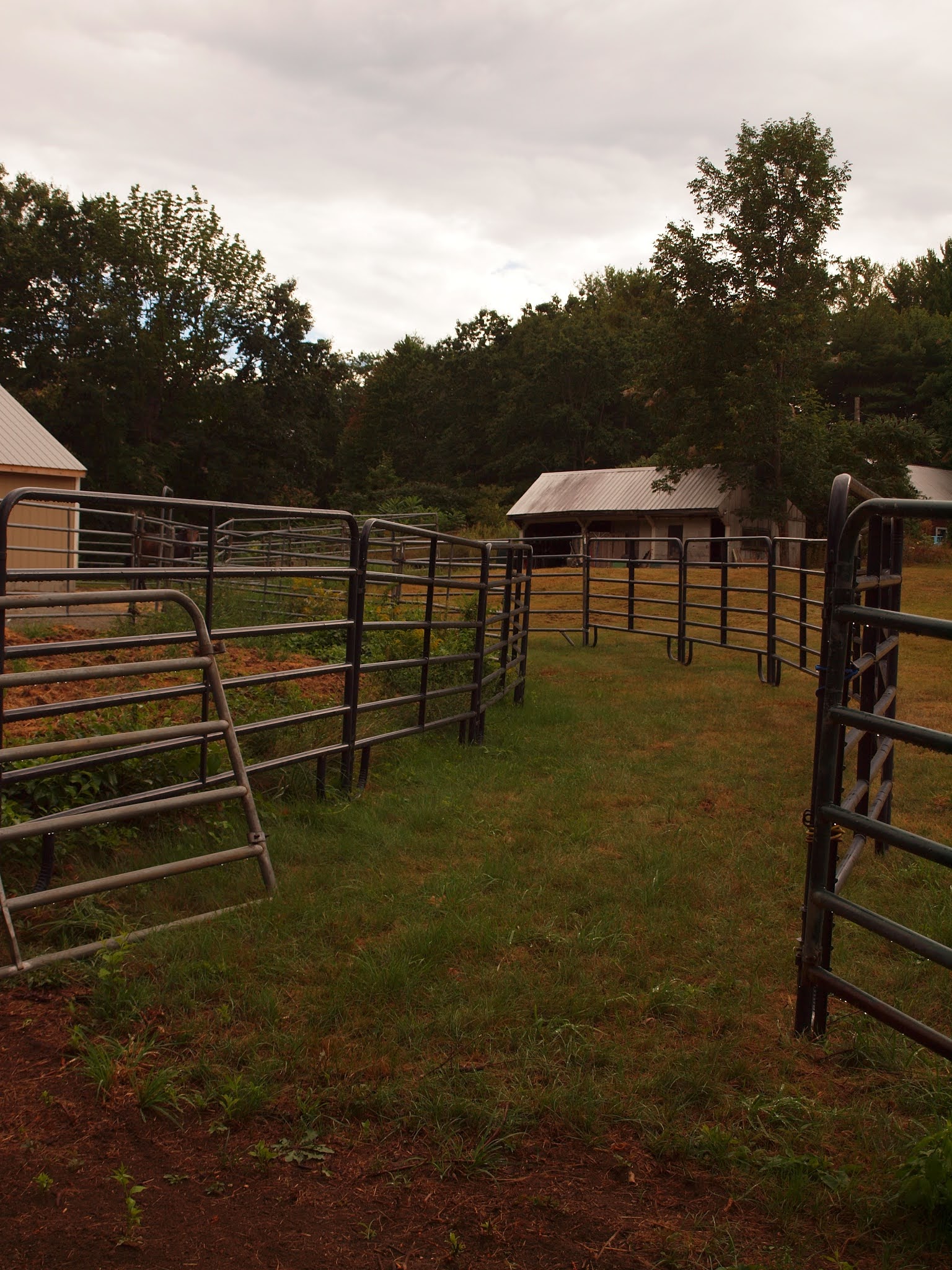
So, my fence.  I'm using a combination of pipe panels and pressure treated posts with no-climb horse fence.  I began by setting up my "chute"; the alley from the main paddock to the track.  I had planned to do the outer fence in the woven wire, and the inner fence in pipe panels, but I quickly ran out of pipe panels.


I still need to go along and set T-posts at every other junction to reinforce the panels.  I had quite a nasty surprise in the last four panels I set up.  I'd dragged them out into the pasture months ago and piled them up, and apparently hornets decided the hollow pipes were a perfect place to build a nest.  Luckily I was only stung once before I figured it out.  You know, for an old fat chick I can really haul ass when I need to.  

Once that was done and I knew how far my panels would go, I dragged out my step in posts and started working on where I wanted the rest of the fence.  I love those posts; I bought them through Amazon Warehouse and got a great deal.  They are like the duct tape of posts - so handy, so useful, so easy.  Not something I'd use permanently, but I love them for roping off newly seeded lawn, supporting taller plants in the garden, and blocking off temporary areas in the grazing pasture.  They're easy to put in, easy to move around, and easy to remove. The clips worked perfectly to hold my measuring tape, and I was able to set them every 10 feet.  After adjusting for gates in various spots, I had a good roadmap set up and was ready to start digging.

At my last house I dug every single fence post hole by hand.  The result?  Nice looking fences.  Also, worsened back issues, a wonky upper rib, smashed fingers, and tendonitis in both elbows that still bothers me to this day.  Digging in New Hampshire is no walk in the park thanks to the abundance of stone in our soil.  My mom's farm is called Stoneridge Farm, an homage to the widespread ledge and boulders that live beneath the Earth's crust on this tiny 8 acre plot.  Dig holes with a manual post hole digger, pry bar, and shovel?  Thanks, but no thanks.  Instead I once again enlisted the services of Corey from CMP Home and Property Maintenance.  Corey came over with his tractor powered post hole digger and was able to dig 3 holes before something inside it blew.  I think we both knew that was coming.  He ended up digging 52 of the 55 holes with his backhoe.  
Perfect machine drilled holes...

Backhoe dug holes...still better than digging by hand!

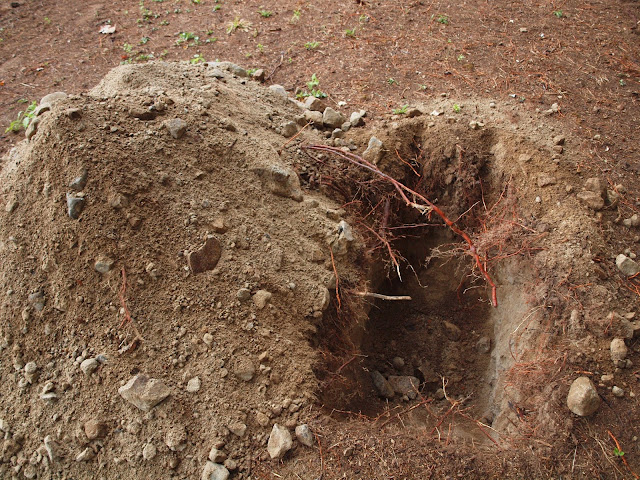
You can see some of the roots and larger stones that would have made this a hellish task.


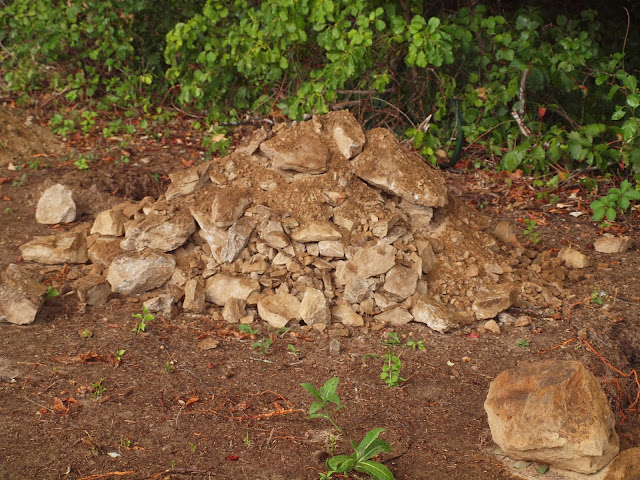
Ugh.  Mostly rocks.  That should be NH's nickname, not "The Granite State".

I had Corey dig holes for two sections; one is the upper section, the other is "The Oaks".  I needed to be able to close off that section when the acorns rain down upon us.  Acorns contain tannic acid that is toxic to equines if eaten.  And of course, my mules will run straight for them, chowing down like it's a free continental breakfast buffet and there's only fifteen minutes left before they need to check out of this Hyatt Regency. 

Behind The Oaks is The Land of the Lost Riding Ring.  I helped my mother build part of the ring years ago, and it was used infrequently by us and her boarder.  Over the years it's grown up and now a small pine grove harbors secrets of horse and mule training past. 
The old riding ring is behind this mess.

 
I can use this fence...if I can get the forest to let it go.
 
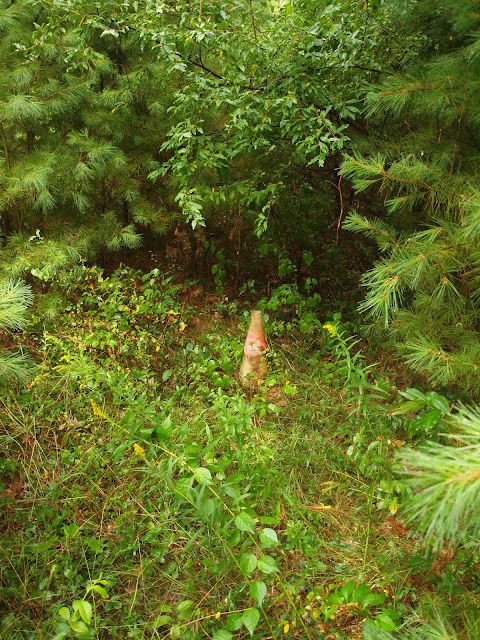
A cone from obstacle course training.  There are barrels in here somewhere, too, from Kelsey's barrel racing practice.

I'm hoping at some point I can tackle the ring area, and possibly the woods beyond.  There's a lot of land here that hasn't been used at all.  But for now, I have 55 posts to put in, hundreds of feet of fence to get up, and lots of bitching to accomplish while I'm doing it.

Let's get the lead out, Mother.


Thursday, July 30, 2020

More Track Work

I had to do it...I called in the big guns. 

I had Corey come back with his superior tractor and york rake to do the job Reputa and my toy rake couldn't.  After showing him what I wanted, we both thought we were looking at a couple hours raking up vines and roots, then he was going to start digging post holes for me.  Well, the bittersweet and Virgina Creeper had other plans.


It's not surprising I couldn't tackle them with a garden tractor, now is it?  And look at the vines wound up in the rake! 

After his six hours of raking and probably 25 trips into the woods with equal sized loads of vines and roots, I still have some work to do. 


It's probably safe to let the mules out on this now, because the roots and vines have at least been snapped so they're not a tripping hazard like they were, but I'd like to get in there and chew up what I can with my mower. 

It's really coming together, though.  I love the area beneath the oaks, it's so peaceful and inviting with the shade.  I think the boys are going to really love this!


Sunday, July 26, 2020

Track Work

I've been trying to get a little bit of work done on the track each day.  So far, it's been yet another exercise in frustration.  I thought I could use my little york rake to clean up some of the debris left behind, but it's much too light and no matter how I set the depth, it just lifts over anything I manage to rake.  Also, the bittersweet and Virginia creeper vines get all entangled around the teeth, and it takes forever to clear it.  I've changed my strategy and started hand picking the bigger objects; rocks, sticks, parts of logs, etc.  Once I get a section picked up I then run my mower at half height for a while, go back and pull any large vines or pick up any leftover large chunks of branch, then lower the mower to the almost lowest height and drive around for twenty minutes chewing stuff up even more.  It's hard to see the difference, but trust me, it's a huge improvement.

Pre-mowing


Post mowing


It's easier to see the difference in the photo below; the area in the back has been twice mowed, the area in the foreground is untouched.


It's slow going, but I want as much temptation gone before I let the boys out on it.  I also want to be sure to leave a mower's width on the outside of the fence so I can keep it cleared.  I have some pressure treated posts and no climb horse fence ready to put up as soon as possible. 

And Fargo knows what's up - when I'm down there working he'll stand at the fence and bang on it with his foot as if to say, "Hurry up, Ma!".  He's nobody's fool, that mule.


Thursday, July 23, 2020

Garden Woes

I was watering the garden the other day and was shocked to discover one of my tomato plants that had been gloriously healthy the day before was suddenly bereft of leaves. 


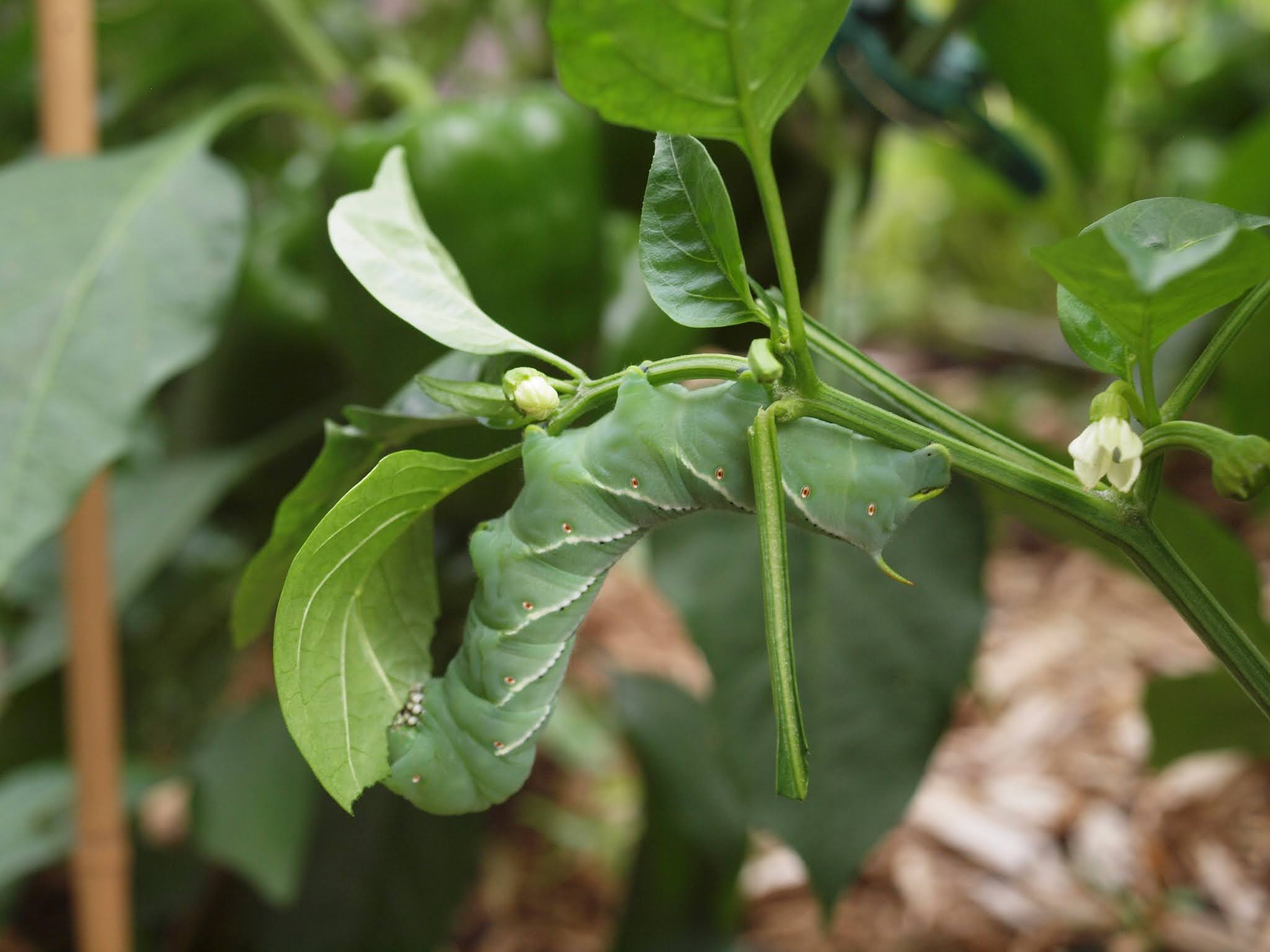
A quick inspection of the other five tomato plants confirmed my suspicion: I was under siege from the dreaded Tomato Hornworm. 

the monster in my garden


Hornworms are horrible pests and if not dealt with immediately they can quickly devastate your tomato plants.  They will not only eat leaves, but love to snack on the fruit as well.


The most common clue one will observe when Hornworms are about is the droppings of the offending creatures, which are quite large.  Fresh droppings are the green of newly digested leaves, and as the poopies dry they become black. 


If you see the droppings, look for the freshest ones and follow a line up the plant, and you'll usually find the Hornworm.  They can be difficult to see at times since they blend in so well with the plants, but then you see one that's five inches long and an a half inch in girth and wonder how the hell you ever missed that creepy thing! 

The worst part of this onslaught is that I have just learned, though unfortunate experience, that tomatoes aren't the only plant on the Hornworm's list of favorites.  It seems they also enjoy stripping pepper plants.


Note the old Hornworm poop on the pepper...gross.

The easiest way to get rid of these nasties is to pull them off and squish them underfoot.  The neon green fluids that burst out are quite surprising at first, but you get used to it.  I've heard there are dusts you can use, but I'm not big on pesticides.  I've also heard diatomaceous earth can be a deterrent.  After all the hard work I put into my gardens, the pop under my size 10 shoe is much more satisfying.

Also satisfying is my onion success.  Here I thought a late planting was going to render a dismal first crop, but the onions are coming along great.  I'll definitely continue to plant these in the future.


And an update on my grass patch in front of the barn - it's growing, albeit slowly.  I didn't do a great job spreading it by hand, so I think I should buy another bag of seed and do a second seeding. 


Note the weeds growing like crazy in the driveway...Mother Nature thumbing her nose at me.

Friday, July 17, 2020

The Track - Phase One

I've wanted for years to build a proper track system for the mules.  No, not a race track.  Track systems toss the notion of large, open pastures or small, square paddocks out the window in favor of long, meandering alleys that promote movement and provide enrichment.  The idea comes from something known as Paddock Paradise, and is supposed to be a real game changer for equines like Flea, who can't be let out to graze. 

Flea suffers from PPID, which in the past was known as Equine Cushing's Disease.  He also suffers from Insulin Resistance, which causes debilitating pain in his feet when uncontrolled, and can cause the hooves to literally fall apart.  The PPID is mostly controlled with medication, the IR is controlled through low starch/low sugar diet, proper hoof trimming, exercise, and medication, and grazing is a big no-no until things are under control.  Some equines never return to grazing, some can graze in short, regulated blocks, and some can only graze using a muzzle that prevents them from ingesting too much grass at one time. For the past two and half years Flea's condition has been a roller coaster ride of 'doing so well' to 'he can barely walk'.  Since we moved from the old house, the mules have been confined to small dry lots; paddocks with zero grass.  The areas are big enough that they can move around, and Fargo can get a pretty good tight gallop going, but they can't really stretch out and move. 

My hope is to start the new track at the existing paddock and build it around the edge of the pasture.  I'm counting on this giving them the incentive to move more instead of hide in the barn all day.  It's been hot, and I purposely situated the barn to make the most of the winter sun.  Unfortunately that means the summer sun is relentless and there's little to no shade in their paddock.  I have two fans constantly going inside the barn to provide them with a bit of a breeze, and the bug curtains across the run-in door keep the horseflies at bay, so they spend a lot of time inside.  The track will meander down through some large trees, and that will provide shade outside the barn.  I'll leave hay nets at different stations to encourage them to travel for their food, and as I'm able I'll add different patches of footing to help naturally wear their hooves.

The first step to this project is to decide where to put the track.  In my case, the edges of the pasture, which had become horribly overgrown.  Since I'll need to get rid of any tempting greens, mowing the brush and then turning the dirt over makes the most sense, versus tearing up valuable established pasture.  I hope that some day Flea can go out on pasture again, so the plan is to retain the grazing area in the center and allow the mules to graze small portions of it.  This is known as strip grazing, and helps to prevent overgrazing.  I was able to hire a local property maintenance contractor to bush hog the pasture edges.  He arrived yesterday, and in three and a half hours the pasture was transformed.  The lighter areas in the photos are the newly mowed areas. 


I swear just cutting that mess added an acre to the pasture!


As an added bonus, I had him mow the small area on the other side of the house that used to be a tiny paddock.  My mother is hoping to utilize this area once she gets it cleaned up.  I can't remember the last time this part of the property was actually opened up!  You can see how overgrown it was; that's an old fence post in the center of the photo that was completely hidden from view before mowing.


The next step is to use the york rake to tear up the ground in the area for the track to get rid of any plants or grass.  I'll start with my little rake, but the contractor will be back soon with his larger, more powerful rake to do the brunt of the work.  I'm very excited to start this project, and hope I can get a small section of track in use before too long.